New Varieties Adapted to the Olive Grove in Seto: Innovation and Sustainability in Agriculture
The hedgerow olive grove has revolutionized the way olive trees are grown, offering a more efficient and sustainable alternative to traditional methods. This system, characterized by the planting of olive trees in very dense rows, allows a complete mechanization of the agricultural tasks, from pruning to harvesting. However, for this model to be successful, it is crucial to select olive varieties that are adapted to the specific requirements of this type of crop. In recent years, the development of new varieties adapted to hedgerow olive groves has been fundamental to maximize yields and improve the quality of the olive oil produced.
Advantages and challenges of hedgerow olive groves
Hedgerow olive groves, also known as super-intensive olive groves, are based on the planting of olive trees in narrow rows, with a high density of trees per hectare (generally between 1,500 and 2,000). This arrangement facilitates mechanization, as machines can move along the rows to perform tasks such as pruning and harvesting, significantly reducing production costs and increasing efficiency.
Despite its advantages, hedgerow olive orchards present specific challenges. Traditional olive varieties, such as ‘Picual’ or ‘Arbequina’, do not always adapt well to this system due to their natural bearing, vigor and water and nutrient requirements. In addition, high planting density can increase the risk of disease and affect tree longevity. For this reason, the need has arisen to develop varieties that are not only suitable for this system, but also maximize yields and maintain high oil quality.
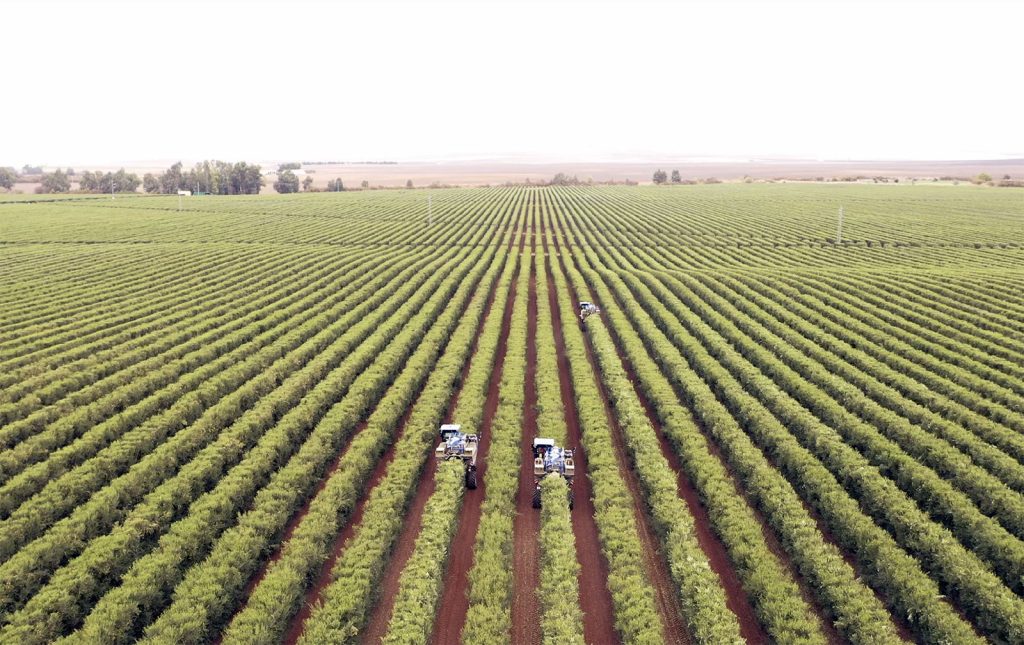
Characteristics of an ideal hedged olive grove
The development of new hedgerow-adapted olive varieties has focused on creating trees with low vigor, compact growth habit and high productivity. Some of the desirable features include:
- Low Vigor: Varieties with controlled growth are ideal for hedgerow olive orchards, as they facilitate tree height management and allow better light penetration, essential for uniform fruit ripening.
- High Productivity: Varieties are sought that offer high olive production from an early age, which maximizes the profitability of the crop.
- Disease Resistance: Given the high level of planting density, it is crucial that new varieties are resistant to major olive diseases, such as repilo or verticillium.
- Oil Quality: The quality of olive oil should not be sacrificed. The new varieties must produce high quality oils, with organoleptic profiles that meet international market standards.
New olive tree varieties
adapted to hedgerow cultivation
In the last decade, several new olive varieties adapted to hedgerow cultivation have been developed and commercialized. Among the most outstanding varieties are:
- Oliana’: It is a variety that combines a small size with high productivity and disease resistance. In addition, it produces an extra virgin olive oil of excellent quality, with a balanced organoleptic profile.
- ‘Sikitita’: Also known as ‘Chiquitita’, it is a variety of low vigor and high productivity, ideal for hedgerow olive groves. It was specifically developed to be compatible with the mechanization of the super-intensive system.
- ‘Lecciana’: A combination of the ‘Leccino’ and ‘Arbequina’ varieties, ‘Lecciana’ is well adapted to hedgerow growing conditions and produces a high quality oil with fruity and bitter notes.
Looking to the future
The use of new varieties adapted to hedgerow olive groves not only improves crop efficiency and profitability, but also contributes to sustainability. Complete mechanization of the process reduces the need for labor and optimizes the use of resources such as water and fertilizers. In addition, disease-resistant varieties reduce dependence on phytosanitary products, thus reducing environmental impact.
The development of new varieties adapted to hedgerow olive groves represents a significant advance in modern agriculture. These varieties allow farmers to optimize their farms, improve the quality of the final product and move towards more sustainable farming practices. With continued research and genetic improvement, the future of the hedgerow olive grove looks promising, positioning olive oil in a prominent place in 21st century agriculture.